
A small kitchen can be just as useful as a large one when every tool has a purpose. The key is to choose versatile equipment that performs several tasks, stores easily, and supports the meals you actually prepare.
Instead of filling cabinets with single-use gadgets, focus on a few dependable essentials. With the right combination of cookware, prep tools, storage solutions, and cleaning supplies, a compact kitchen can remain organized and comfortable to use.
Start With Versatile Cookware
Cookware often takes up more space than any other category, so choose pieces that can handle several cooking methods.
A medium saucepan
A saucepan is useful for cooking grains, pasta, vegetables, sauces, soups, and oatmeal. A medium size is often the most practical choice for a small kitchen because it works for both individual portions and small family meals.
Look for a saucepan with:
– A sturdy handle
– A matching lid
– A flat base
– A size that fits your cooktop comfortably
A lid that can also fit another pot or pan is especially helpful when cabinet space is limited.
A skillet
A skillet is one of the most useful tools in any kitchen. Use it for sautéing vegetables, cooking eggs, searing ingredients, warming leftovers, and preparing one-pan meals.
A 10-inch skillet is a good all-purpose option. If you often cook for one or two people, a slightly smaller pan may be enough. Choose a design that is comfortable to lift and easy to clean.
A stockpot or multipurpose pot
A deep pot can be used for pasta, soups, steamed vegetables, and larger batches of food. If storage is tight, choose a pot that is tall rather than extra wide. It will hold a useful amount of food without taking up too much cabinet space.
Some multipurpose pots include a steamer insert. This can replace a separate steamer basket and make the pot more useful.
Choose Compact Prep Tools
Food preparation becomes easier with a few well-designed tools. Avoid buying several versions of the same item unless you use them regularly.
One good chef’s knife
A sharp chef’s knife can handle chopping, slicing, mincing, and portioning most ingredients. For many small kitchens, one dependable knife is more useful than a large knife set.
A blade between 6 and 8 inches is a practical size for everyday cooking. Add a small paring knife if you frequently peel fruit, trim vegetables, or work with small ingredients.
Always store knives safely. A wall-mounted magnetic strip, protective blade covers, or a compact knife block can help keep them organized.
A cutting board
Choose a cutting board that is large enough for comfortable chopping but small enough to fit your available counter space. A board with a handle or a hanging hole can be stored vertically or on a wall.
If possible, use a board made from a durable, easy-to-clean material. A board with nonslip edges or a damp towel underneath can help keep it steady during use.
Measuring tools
A set of measuring cups and spoons is useful for cooking and baking. To save space, choose nesting designs that fit inside one another.
A digital kitchen scale can also be valuable, especially for baking or portioning ingredients. Many models are thin enough to store in a drawer or stand upright on a shelf.
A box grater
A box grater can shred cheese and vegetables, create fine zest, and add texture to ingredients. It replaces several smaller tools while taking up relatively little space.
If you prefer an even smaller option, a flat grater can be stored in a drawer. However, a box grater may offer more functions in one tool.
Add Tools for Quick, Everyday Cooking
A few simple utensils can make daily cooking faster without crowding your drawers.
Useful choices include:
– A silicone spatula for stirring and scraping
– A wooden spoon for mixing and cooking
– Tongs for turning and serving food
– A ladle for soups and sauces
– A slotted spoon for lifting food from liquids
– A vegetable peeler
– A can opener
– Kitchen scissors
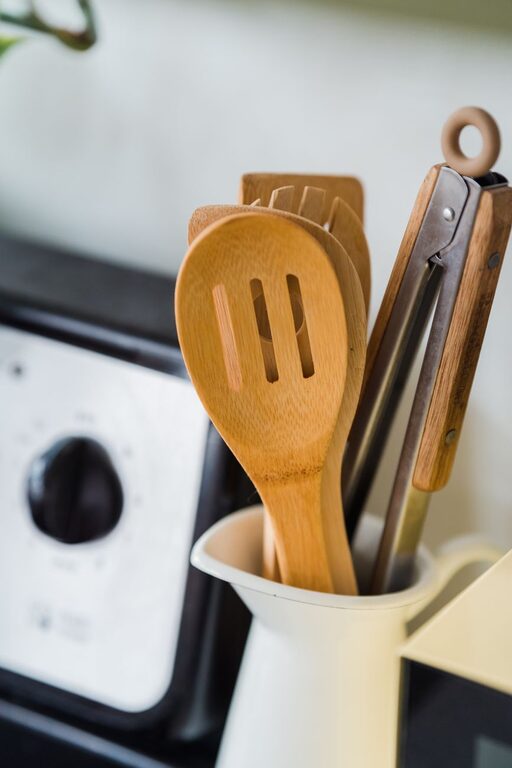
Look for utensils with hanging holes or compact designs. A small countertop container can keep frequently used tools together, while less-used items can be stored in a drawer.
Kitchen scissors are particularly versatile. They can trim herbs, open packages, cut parchment, and separate small portions of food. Choose a pair that comes apart for thorough cleaning if possible.
Make Room for Small Appliances
Small appliances can be helpful, but they should earn their space. Before buying one, consider how often you will use it and whether it can replace another tool.
A compact blender
A small blender can make smoothies, sauces, soups, dressings, and blended drinks. An immersion blender may be even more space-efficient because it can be stored in a drawer and used directly in a pot or container.
A toaster oven
A toaster oven can toast bread, reheat leftovers, roast vegetables, and bake small portions. It may be a practical alternative to using a full-size oven for simple meals.
Choose a model that fits safely on your counter with space around it for ventilation. Measure the area before purchasing.
An electric kettle
If you regularly make tea, coffee, instant grains, or hot beverages, an electric kettle can save time. A compact model with a simple design is usually enough for everyday use.
Avoid keeping appliances on the counter if you rarely use them. Store them in a cabinet, on a shelf, or in a designated appliance area when possible.
Use Storage Tools That Save Space
Good storage can make a small kitchen feel much larger. Choose containers and organizers that use vertical space and keep supplies easy to see.
Stackable containers
Clear, stackable containers help organize dry goods, leftovers, and prepared ingredients. Matching shapes usually use cabinet and refrigerator space more efficiently than a collection of different containers.
Choose containers with secure lids and sizes that suit your normal cooking habits. A few medium containers may be more useful than many tiny ones.
Drawer and shelf organizers
Drawer dividers prevent utensils from becoming mixed together. Shelf risers create a second level inside cabinets, while pull-out bins make items at the back easier to reach.
A narrow organizer can also make use of unused spaces beside the refrigerator, under the sink, or between appliances.
Wall and door storage
Hooks, rails, and magnetic holders can move tools off the counter and out of crowded drawers. Cabinet door racks can hold cutting boards, wraps, cleaning supplies, or small containers.
Use wall storage selectively. Keeping only your most-used items in view helps the kitchen look tidy and prevents the space from feeling crowded.
Do Not Forget Cleaning Essentials
A small kitchen benefits from simple cleaning tools that are easy to store and use every day.
Keep the following nearby:
– A dish brush or sponge
– A microfiber cloth
– A small scrub pad
– Dish soap
– A compact drying rack or absorbent mat
– Reusable cleaning towels
– A small waste container or compost bin, where appropriate
A foldable drying rack can be stored when not in use. You can also choose a rack that sits over the sink to free up counter space.
Choose Tools Based on Your Routine
The best small-kitchen setup is personal. Someone who cooks pasta and soups may need a larger pot, while someone who prepares quick meals may rely more on a skillet and toaster oven.
Before buying anything, review the tools you already own. Remove duplicates, donate items you never use, and measure cabinets, drawers, and counters. Then choose equipment that fits both your space and your habits.
A small kitchen does not need dozens of gadgets. A few versatile tools, smart storage solutions, and a regular decluttering routine can provide everything needed for efficient everyday cooking.